
Information Technology

Information Technology is one of the most transformative fields in the world today, powering industries, economies, and innovation. It is ideal for students who enjoy solving problems, understanding systems, working with data, and building digital solutions. IT programs introduce students to programming, database management, networking, cybersecurity, cloud computing, artificial intelligence, machine learning, and software engineering. They learn how technologies function, how to build applications, and how to secure digital systems.
Studying IT abroad provides access to cutting-edge research, industry partnerships, and hands-on learning environments. Universities often collaborate with leading tech companies, giving students opportunities to work on real projects, internships, and technology labs that mirror professional work settings. Students gain exposure to global tech ecosystems and learn how technology drives different sectors such as healthcare, finance, manufacturing, and logistics.
Career opportunities in IT are vast and continually expanding. Graduates can become software developers, data scientists, cybersecurity analysts, cloud architects, AI specialists, IT consultants, system administrators, or product managers. With digital transformation accelerating worldwide, employers seek graduates who are innovative, adaptable, and skilled in solving complex technological challenges.
What makes IT particularly exciting is its limitless potential. IT professionals build the tools, platforms, and solutions that shape the future—from mobile apps and artificial intelligence to cybersecurity frameworks and smart cities. It is a field where creativity meets logic, and where problem-solving leads to real-world impact. For students who want a future-driven career with global demand, Information Technology is a powerful and rewarding choice.
Structure of the Information Technology program
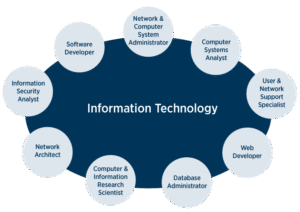
Bachelor’s, master’s, and doctoral degree programs in computer and information technology are available at universities worldwide. Institutions may label these programs differently — for example, some may call them “computer science,” “software systems,” or “information systems.” Therefore, it’s essential to review the curriculum carefully to ensure it matches your academic and career aspirations.
A bachelor’s degree in IT, commonly referred to as a BSc or BIT, usually takes three to four years to complete. Afterward, you can advance to a master’s degree (MSc or MIT), which typically spans one to two years. For those pursuing academic research or advanced specialization, a PhD in Information Technology generally requires two to four additional years of study.
Choosing to study IT abroad exposes you to cutting-edge technologies, global innovation hubs, and international networking opportunities. You’ll gain hands-on experience with modern tools, enhance your technical expertise, and immerse yourself in a culturally diverse learning environment — preparing you for a successful global tech career.
DEGREES IN INFORMATION TECHNOLOGY FROM AROUND THE WORLD
Degrees in Information Technology (IT) provide students with comprehensive knowledge of designing, managing, and implementing digital systems. Core subjects often include programming, database management, cybersecurity, networking, and cloud computing. These programs aim to equip students with both technical skills and problem-solving abilities for today’s fast-evolving tech industry.
Assessment methods typically consist of written assignments, lab-based projects, and presentations. Students attend lectures, workshops, and practical sessions while receiving guidance from academic mentors. Many universities also include internship opportunities, enabling students to gain hands-on experience and apply their classroom learning to real-world scenarios.
The curriculum and course structure may differ across universities, but most IT degrees include a combination of core and elective modules. This flexibility allows students to specialize in areas such as software engineering, data analytics, artificial intelligence, or network security — preparing them for diverse global career paths in technology.
The following are some of the most common modules you’ll study:
- Computer systems and network architecture
- Data protection and cybersecurity
- Application and software development
- Database design and management
- Front-end and back-end web technologies
- Artificial intelligence and machine learning
- Cloud computing and virtualization
- Business information systems
- Big data analytics and visualization
DEGREES IN INFORMATION TECHNOLOGY TYPES
Degrees in cyber security offered in other countries

Cyber Security: Safeguarding the Digital Future In today’s fast-evolving digital era, cyber threats pose one of the greatest risks to individuals, organizations, and nations alike. To counter these challenges, cyber security programs are crafted to equip learners with the technical expertise and practical strategies required to detect, prevent, and respond to cybercrime.
As a cyber security learner, you’ll gain a solid understanding of how digital systems function, how vulnerabilities arise, and how to secure them effectively. You’ll develop the skills to build and protect secure software, manage sensitive data safely, analyze potential cyber threats, and handle incidents with precision. You’ll also explore the laws, ethics, and global standards that shape modern cyber security practices.
Through your training, you’ll discover how different countries and organizations protect their digital infrastructures from cyberattacks, malware, and data breaches.
By engaging with advanced technologies, tools, and methodologies, you’ll not only enhance your technical skills but also grow as a confident and adaptive professional. Beyond academic knowledge, your journey will foster personal growth as you collaborate with experts, exchange ideas across borders, and become part of a global network of cyber defenders.
Structure of the Cyber Security Program
Cyber Security
Cyber security education can be pursued through several academic paths. Undergraduate programs generally span three to four years and are offered as a BSc or BTech, depending on the institution. Many universities also encourage an internship year during the course, allowing students to gain real-world experience before graduation.
Once you’ve completed your bachelor’s degree, you can advance to a master’s program such as an MSc or MTech in Cyber Security. These postgraduate courses typically take one to two years to finish, depending on whether you study full-time or part-time.
For those aiming to reach the highest academic level, PhD programs in cyber security are also available. These research-intensive programs usually take between five and six years and focus on developing advanced expertise in cyber defense, digital forensics, and emerging technologies.
Cyber security programs are designed to build both theoretical understanding and practical skill. You’ll participate in lectures, seminars, workshops, and hands-on lab sessions that simulate real-world scenarios, preparing you for a variety of roles in the cybersecurity domain.
The university or country you choose will also shape your learning experience — influencing the technologies, policies, and frameworks you study.
Most programs, however, will include core subjects in the following key areas:
- Network Security and Cryptography
- Ethical Hacking and Penetration Testing
- Digital Forensics and Incident Response
- Cyber Laws and Ethical Practices
- Data Protection and Privacy Management
- Cloud and Application Security
.
Degrees in Cyber Security from Around the World
As technology continues to advance globally, securing digital data against threats has become more essential than ever. By pursuing a cyber security degree, you’ll learn how to protect, manage, and securely transfer information in an increasingly connected digital world.
You’ll explore topics such as ethical hacking, encryption, network defense, and digital forensics. The program will also introduce you to cyber laws, risk management, and secure software development. You’ll study real-world threats — from malware and phishing to large-scale data breaches — and learn how to detect, prevent, and respond effectively to them.
With cyber threats affecting businesses, governments, and individuals worldwide, this program will help you understand the global landscape of cyber defense. Studying abroad or with international collaboration will expose you to different security standards and best practices used around the world.
Structure of the Cyber Security Program
A bachelor’s degree in cyber security generally takes three years to complete, or four years if it includes an integrated internship or practical training component. These hands-on experiences allow students to strengthen their technical skills, gain workplace exposure, and boost career readiness.
In some countries, bachelor’s programs begin with a foundation in computer science and gradually specialize in cyber security during later years of study. This ensures that graduates have both a solid computing background and advanced knowledge of security technologies.
Master’s programs in cyber security are designed for professionals who wish to advance their technical expertise and leadership potential. Typically, these courses take one year of full-time study or two years of part-time study to complete, focusing on advanced topics like digital forensics, threat intelligence, and cloud security.
Students seeking further academic growth can pursue a PhD in cyber security. Doctoral programs usually span four to six years and emphasize deep research in emerging areas such as artificial intelligence in security, quantum encryption, and national cyber defense strategies. Throughout your studies, you’ll participate in lectures, workshops, and labs that combine theory with practical, real-world application.
INFORMATION TECHNOLOGY ELIGIBILITY CRITERIA (UG & PG)
Courses for Undergraduates:
To be eligible for B.E./B.Tech programs, candidates must have passed their 12th Board examination with core subjects Physics, Chemistry, and Mathematics from a recognized board/university. Computer Science is also preferred as a subject during the 12th Board examination.
For BCA (Bachelor of Computer Applications), candidates should have passed their 12th Board examination from a recognized board/university with Science (Physics, Chemistry, Math/Biology) or Commerce (Physics, Chemistry, Maths/Biology). Once again, Computer Science is desirable as a subject during the 12th Board examination.
Courses for Post-Graduate Students:
Candidates for M.Tech must have earned a B.E./B.Tech degree in a relevant branch from a recognised university or board.
Candidates for the MCA must have a BCA or B.Sc degree in Information Technology or Computer Science, with Mathematics as a compulsory subject in Class 12 or at the graduate level.
THE BEST COUNTRIES IN THE WORLD TO STUDY INFORMATION TECHNOLOGY
For both undergraduate and postgraduate students, an Information Technology degree is one of the most coveted degrees today.Information technology has a wide range of applications in all sectors of the economy. It provides a promising future for students who are innovative and growth-oriented. It has become the most favored job option all over the world due to increased demand for Information Technology specialists. Information technology can be used in a variety of industries, including finance, agriculture, health and medicine, railways, forensic science, law enforcement, and even education.