
Study Destinations
Study in Denmark
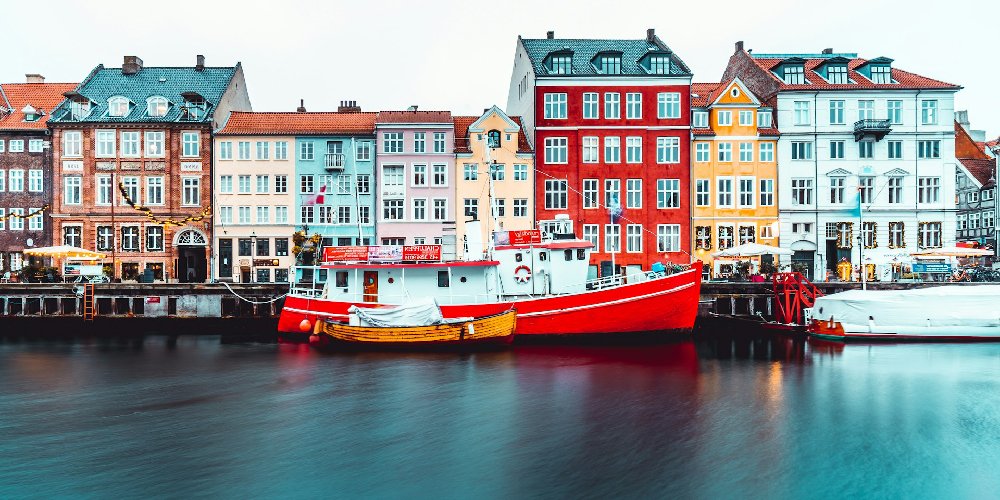
Denmark is known for its intellectual excellence and efficiency, making it a prime destination for international students. This appeal is further enhanced by the country’s beautiful surroundings and top-notch public services.
Why Study in Denmark?
Denmark has a long-standing tradition of education, with higher education institutions dating back to 1479. The country offers a variety of institutions, including universities, art academies, marine education institutions, business academies, and university colleges.
- Universities provide programs at the bachelor’s, master’s, and doctorate levels across multiple disciplines.
- University colleges focus on vocational and professional courses, preparing students for specific careers.
- Art academies specialize in design and fine arts education.
- Marine education institutions combine research and practical training for maritime professions.
- Business academies offer professional bachelor’s degrees and two-year academy profession programs.
Degrees from Danish institutions are recognized internationally, adhering to the Bologna Process, ensuring global acceptance and mobility. Denmark has 8 universities, with five ranked in the top 500 of the QS World University Rankings 2022. Leading the rankings is the University of Copenhagen, ranked 79th globally, followed by the Technical University of Denmark, ranked 99th.
About Denmark
Officially known as the Kingdom of Denmark, the country has a population of over 5.78 million. Located in the Nordic region and bordering Germany, Denmark features flat landscapes, sandy coasts, low elevations, and a temperate climate. The nation is made up of 443 islands, with a rich history that includes joining the Kalmar Union in 1397 and later becoming part of the European Economic Community (now the EU) in 1973, while retaining its own currency.Denmark is considered one of the world’s most socially and economically advanced nations, offering a high standard of living and ranking highly in education, healthcare, and democratic governance. The country is led by a monarch and a prime minister, with the monarch serving mostly a ceremonial role and the prime minister handling policy and executive decisions.
Living and Educational Expenses in Denmark
Denmark’s official currency is the Danish Krone (DKK).
Tuition Fees:
- EU/EEA students generally study for free at Danish universities.
- Non-EU/EEA international students must pay tuition, which varies by institution and program level.
- On average, tuition ranges between DKK 45,000 and DKK 120,000 per year.
- Many scholarships are available for both EU and international students, offered by universities and other organizations.
Living Costs:
- Monthly living expenses typically range from DKK 6,000 to DKK 13,500, depending on the city.
- Expenses include accommodation, food, transportation, and other essentials.
- Health insurance may be required; some emergency medical care is free, but confirm requirements with your university.
Work Opportunities:
- Nordic, EU/EEA, and Swiss students can work without a permit.
- Other international students may work up to 20 hours per week during the academic year and full-time during June, July, and August with a work permit.
Copenhagen Student Visas
Visa requirements depend on nationality:
- EU/EEA or Swiss students do not need a visa but must apply for a residency permit upon arrival. This requires a passport, passport photo, and a letter of admission from the university submitted to Statsforvaltningen (state administration).
- Non-EU/EEA students must obtain both a visa and a residence permit before entering Denmark.

Languages
Danish is the official language of Denmark, with degree programs commonly offered in both Danish and English. If studying in a language other than your mother tongue, you must prove your language proficiency, usually through an English language test or test results. If you don’t meet the required standard, you may take a language course to improve. Even if your studies are in English, learning Danish is beneficial. Practicing with locals and other students will enhance your daily life and look impressive on your CV or resume.
Cities
Copenhagen
Copenhagen, the capital of Denmark, has a population of over 777,000 residents. Situated on the island of Zealand, the city is connected to Malmö, Sweden, via the Øresund Bridge, Europe’s longest combined road and rail bridge. Originally a small fishing village founded in the 10th century, Copenhagen grew into Denmark’s cultural, intellectual, and economic hub, becoming the nation’s capital in the 15th century. The city is home to three universities and numerous other higher education institutions. Among them, the University of Copenhagen, established in 1479, is the oldest and largest, offering a wide range of programs across multiple disciplines. Each year, it attracts over 1,500 international students, providing a vibrant and diverse academic environment.
Aarhus
Aarhus, located on the Danish mainland, has a population exceeding 273,000 residents. Known as Aarhus from 1948 until 2010, the city experienced significant growth during the industrial revolution. Today, it is a central hub for trade, services, and industry in the Jutland region and is recognized as Denmark’s fastest-growing city, with one of the youngest populations in the country.Aarhus is home to two universities and various higher education institutions. The most prominent, Aarhus University, was founded in 1928 as a public research institution. The university comprises four faculties and 27 departments, offering a wide array of courses across numerous disciplines, making it a major center for learning, research, and innovation in Denmark.