
Study Destinations
Study in Italy
Italy has a long and distinguished academic tradition, being home to some of Europe’s earliest and most influential universities. The University of Bologna, founded in 1088, holds the distinction of being the oldest continuously operating university in the world, setting the foundation for modern higher education.
Today, Italy continues to uphold its academic legacy with a wide range of esteemed institutions. Many Italian universities consistently feature among the top 200 in the QS World University Rankings, recognized for their strong academic programs, research excellence, and cultural heritage. Italy has also been a pioneer in higher education reform, most notably through its leading role in the Bologna Process—a framework designed to harmonize higher education systems across Europe. As one of the four founding nations of the European Higher Education Area, Italy played a central role in shaping this initiative. The Bologna Process, initiated with the Sorbonne Declaration in 1998, was the first significant step toward creating a unified European education structure. Its objective is to enhance quality assurance, comparability of degrees, and student mobility throughout Europe—principles that are now integral to Italy’s academic framework.
Today, Italy hosts approximately 97 universities, which can be broadly classified into the following categories:
State Universities: Publicly funded institutions offering a wide range of academic disciplines and research opportunities.
Non-State Universities: Privately operated institutions recognized by the Ministry of Education, often specializing in niche fields.
Higher Schools for Advanced Studies: Elite institutions focusing on postgraduate education and advanced research.
Telematic Universities: Online universities offering remote degree programs.
Specialized Universities: Dedicated to specific areas such as art, music, architecture, or language studies.
Would you like me to continue with the “Why Study in Italy?” section next (covering tuition, lifestyle, and
State Universities:
Most Italian universities fall under this category and are funded and managed by the national government. They offer a broad range of academic disciplines and maintain high educational standards across various fields.
Other Publicly Supported Universities:
These institutions receive financial support from local or regional authorities rather than the central government, offering more regionally focused academic programs.
Private Universities:
Privately funded and managed, these universities operate independently of government funding. They often provide specialized programs and maintain smaller class sizes for a more personalized learning experience.
Superior Graduate Schools (Scuole Superiori Universitarie):
These are elite institutions dedicated to advanced postgraduate education and high-level research. Admission is highly competitive, and these schools are known for their strong academic rigor and innovation.In addition to universities, Italy is home to around 137 specialized higher education institutions, including academies for art, music, and dance, as well as research and technical schools that focus on professional and creative disciplines.
QUALIFICATION STRUCTURE:
Italy’s higher education system follows a structured path that aligns with the Bologna Process, offering a clear progression through academic levels:
Bachelor’s Degree (Laurea Triennale): Typically a three-year program providing foundational knowledge in a chosen field.
Master’s Degree (Laurea Magistrale): Usually a two-year program (some one-year professional programs exist) that allows students to specialize further.
Doctorate (PhD – Dottorato di Ricerca): A three-year advanced research program focused on original contributions to the field.
While most courses are taught in Italian, universities are increasingly offering English-taught programs, particularly at the postgraduate level. This makes Italy an attractive option for international students who may not yet be fluent in Italian but wish to study in a globally recognized academic environment.
About Italy
Italy, located in Southern Europe on the Apennine Peninsula, is celebrated for its timeless beauty, rich history, and cultural depth. The country is a perfect blend of ancient heritage and modern innovation, offering a wide spectrum of higher education opportunities for international students.
Italy’s education system allows students to pursue Bachelor’s degrees, which typically take three years, followed by Master’s programs lasting one to two years. After completing a Master’s, students can advance to PhD programs, which generally span three years and focus on research and academic specialization.
Comprising mainland Italy and its surrounding islands, the country stretches southward toward the coastlines of North Africa, offering an unparalleled mix of stunning landscapes and vibrant city life.
The following are some of Italy’s most popular tourist attractions:
The Colosseum:
Located in Rome, the Colosseum is one of the most iconic landmarks in the world. Built in the 1st century AD, this massive amphitheatre once hosted gladiator contests, public spectacles, and dramas. Today, it stands as a symbol of ancient Roman architecture and engineering excellence, attracting millions of visitors annually.
The Canals of Venice:
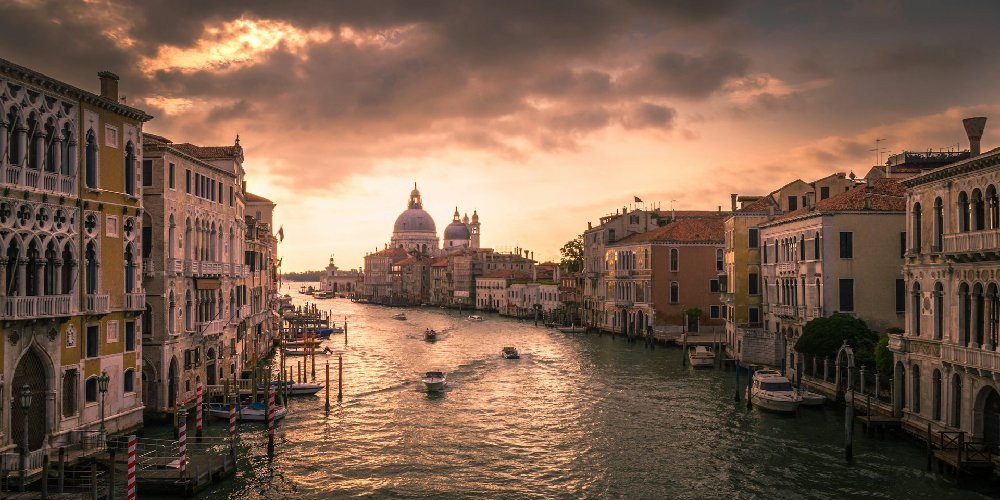
Venice, famously called “The City of Water,” is a stunning maze of over 150 canals connected by picturesque bridges. The Grand Canal, lined with elegant Renaissance and Gothic palaces, is the heart of the city. Visitors can enjoy romantic gondola rides and marvel at landmarks such as St. Mark’s Basilica and Piazza San Marco, both representing the grandeur of Venetian history and culture.
Pompeii:
The ancient city of Pompeii, located near Naples, offers a remarkable glimpse into Roman life frozen in time. After the catastrophic eruption of Mount Vesuvius in 79 AD, the city was buried under volcanic ash, preserving homes, streets, and artifacts. Today, Pompeii is a UNESCO World Heritage Site and one of the most visited archaeological destinations in the world.
The Leaning Tower of Pisa:
One of Italy’s most recognizable landmarks, the Leaning Tower of Pisa began construction in 1173 and soon developed its famous tilt due to unstable soil. Despite its imperfection, the tower remains a masterpiece of medieval architecture and a popular tourist attraction, offering breathtaking views from its top.
Lake Como:
Shaped like an inverted “Y,” Lake Como is one of Italy’s most scenic destinations. Surrounded by lush mountains and elegant villas, it has been a retreat for artists, aristocrats, and celebrities since Roman times. The towns around the lake, such as Bellagio and Varenna, offer stunning views, luxury stays, and serene beauty.
In addition to its cultural treasures, Italy is also a hub for higher education and research. The country is home to 137 specialized higher education institutions, including academies focused on art, music, dance, design, and applied sciences.
Italy provides a diverse range of academic opportunities.
Bachelor’s programs generally last three years, laying the foundation for further specialization.
Master’s degrees typically take one year and prepare students for advanced professional or academic roles.
PhD programs extend over three years, emphasizing independent research and innovation.
Moreover, many Italian universities now offer programs taught in English, particularly in fields like business, engineering, and international relations. This growing trend ensures that students from around the world can pursue their studies in Italy, even without fluency in Italian.
Would you like me to continue the next section — “Studying and Living in Italy: How Much Does It Cost?”
Studying and Living in Italy: How Much Does It Cost?
Italy offers a world-class education at a comparatively affordable cost, making it a popular destination for international students. Tuition fees and living expenses in Italy are generally lower than those in many other European and North American countries, providing students with an excellent balance of quality and value.
Tuition Fees:
The cost of studying in Italy varies depending on the type of institution and program. Public universities are typically more affordable, with annual tuition fees ranging from €900 to €4,000 for bachelor’s programs. Private universities, on the other hand, have higher tuition fees, usually between €6,000 and €20,000 per year.
Students from EU or EEA countries generally pay the same tuition rates as Italian nationals, while non-EU/EEA students may face slightly higher fees.
Financial Aid and Scholarships:
Italy provides several options to help students manage their educational expenses. Financial aid is available to both Italian and international students, often based on academic merit or financial need. Support can come in the form of grants, scholarships, or tuition waivers, which may cover part or all of tuition costs, accommodation, and living expenses.
Students are encouraged to contact their chosen university’s financial aid office early to explore available opportunities and application deadlines.
Accommodation and Living Costs:
Unlike some countries, most Italian universities do not have on-campus housing. However, they offer assistance to help students find suitable accommodation nearby. Options include university-managed hostels, shared apartments, and private rentals. Renting a private apartment, especially in major cities like Rome or Milan, can be relatively expensive, so students should plan their budget accordingly.
On average, living expenses—including housing, food, and transportation—can range between €700 and €1,200 per month, depending on the city and lifestyle.
Part-Time Work Opportunities:
Working part-time can be a great way to supplement your income while studying. EU students are free to work in Italy without additional authorization. Non-EU students are typically permitted to work up to 20 hours per week, as outlined in their visa conditions. However, it’s important not to rely solely on part-time work to cover major expenses.
Having a good command of the Italian language can significantly improve your job prospects, especially for roles in customer service, hospitality, and local businesses.
Scholarships to Study in Italy
Italy offers a wide range of scholarships and financial support options for international students, ensuring that talented learners from around the world can pursue their education regardless of financial background. Scholarships in Italy are available at both national and institutional levels, providing funding based on academic excellence, financial need, or specific fields of study.
Students can apply for government-funded scholarships, which may cover tuition fees, accommodation, and living expenses. Many Italian universities also offer their own scholarships and tuition fee reductions for outstanding international applicants. Additionally, several regional scholarship programs exist, supported by local governments to promote education and cultural exchange.
Scholarships can take various forms, such as student grants, tuition waivers, or living stipends, helping reduce the overall cost of studying and living in Italy. Students are advised to visit the official website of their chosen university and check eligibility requirements, deadlines, and application processes. For personalized assistance, contacting the university’s international office is highly recommended, as they can guide students through all available financial aid opportunities.
Student Visas in Italy
The requirement for a student visa to study in Italy depends on your citizenship and length of stay. Students from EU or EFTA countries (including Iceland, Liechtenstein, Norway, and Switzerland) do not need a visa to study in Italy. However, students from non-EU countries must apply for a student visa before entering the country.
To apply for a visa, students must provide proof of university admission, sufficient financial means, accommodation details, and comprehensive health insurance. Once the visa is issued, non-EU students are required to apply for a residence permit within eight days of arriving in Italy. This can be done at the local post office, and most universities offer support to guide students through this process.
EU and EEA students are exempt from applying for a residence permit, but those staying for longer than three months must register with the local Anagrafe (registration office) in their city of residence. Students who plan to stay temporarily can register as temporary residents, while those intending to live longer can establish permanent residency.
Students from EU countries staying in Italy for more than three months must also register with the Italian National Health Service (SSN) to gain full access to public healthcare. This registration is free of charge and provides a health card (Tessera Sanitaria), granting the same healthcare benefits as Italian citizens.
For non-EU students, having valid health insurance is mandatory. There are three main options for obtaining coverage:
- Enroll in the Italian National Health Service (SSN): Registration can be completed at the local health authority (ASL).
- Purchase private health insurance from your home country, verified by the Italian Embassy and translated into Italian or English.
- Buy private health insurance in Italy, which can be arranged before or after arrival but is required for the visa application.
These steps ensure that all international students studying in Italy have access to proper healthcare, security, and legal residency throughout their academic journey.

Languages
Canada’s official languages are English and French. However, in the 2016 Census, over 7.3 million Canadians reported a mother tongue other than these. Languages such as Chinese, Punjabi, Spanish, Tagalog, and Arabic are spoken by significant communities. Studying in Canada offers a valuable opportunity to learn multiple languages, enhancing your CV/resume. Most Canadian universities teach in English, and some in Quebec offer courses in French. If studying in a non-native language, you may need to demonstrate proficiency. Schools often offer short language courses to help students meet language requirements.
Cities
Rome
Rome, the capital city of Italy, is home to around 4.3 million residents, making it the fourth most populous city in the European Union. With a history stretching over 28 centuries, Rome is one of Europe’s oldest continuously inhabited cities. Its historic center, featuring iconic landmarks such as the Colosseum and the Vatican City, is designated as a UNESCO World Heritage Site, attracting millions of tourists and scholars alike.The city is an attractive destination for international students due to its rich cultural heritage, vibrant lifestyle, and diverse educational opportunities. Rome hosts a wide range of universities, colleges, and specialized academies across multiple fields of study. Prominent institutions include La Sapienza University, one of the world’s largest universities with over 140,000 students, as well as the Istituto Europeo di Design, Scuola Lorenzo de’ Medici, and the Rome Business School, offering high-quality programs in arts, design, business, and humanities.Rome combines academic excellence with cultural immersion, giving students the unique opportunity to live and study in a city renowned for its history, art, and global influence. Its blend of world-class education, historical significance, and lively student community makes it a top choice for international learners seeking both education and experience in Italy.
Milan
Milan, Italy’s second-largest city with a population of over 1.3 million, is globally recognized as a hub for finance, fashion, and design. The city hosts the prestigious Milan Fashion Week and attracts millions of tourists each year to its art galleries and museums, which feature masterpieces by renowned artists, including Leonardo da Vinci. Milan is also a center for higher education, offering 14 universities and institutions across various fields. Among them, Bocconi University, founded in 1902, is internationally acclaimed for business and economics programs. Other notable institutions include the New Academy of Fine Arts and the European Institute of Design, providing programs in arts, design, and creative studies.Milan combines academic excellence with cultural vibrancy, making it an attractive destination for international students interested in fashion, business, and the arts.
Florence
Florence, the capital of Italy’s Tuscany region, has been a UNESCO World Heritage Site since 1982 and is celebrated as one of the world’s most beautiful cities. Known as the cradle of the Renaissance, Florence has a rich political and cultural history, highlighted by the influence of the Medici family. The city is famed for its museums, art galleries, and magnificent architecture.Florence is also a center for higher education, hosting institutions such as the University of Florence, Florence University of the Arts, and the Polimoda International Institute of Fashion Design and Marketing. With a wide range of courses in arts, humanities, and fashion, Florence offers diverse learning opportunities while allowing students to immerse themselves in its rich cultural and artistic heritage.