
Study Destinations
Study in Japan
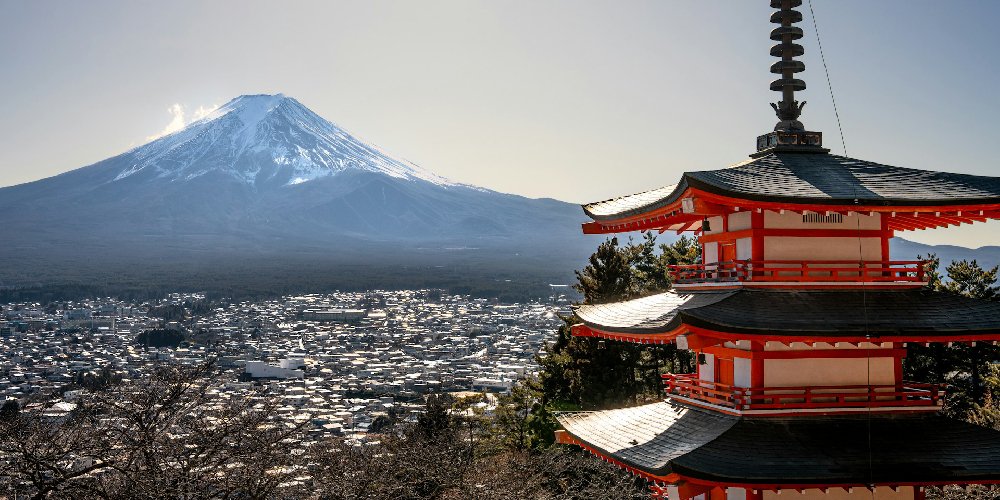
Japan stands out as an exceptional destination for international students due to its diverse landscape and top-tier educational system. Renowned for its blend of tradition and innovation, Japan offers a dynamic environment with advanced technology and educational opportunities. The country’s welcoming stance towards international students further enhances its appeal, supported by proactive initiatives from the Japanese government to attract global talent.
Japan – Why Study There?
Japan has positioned itself as a global leader in education and innovation, supported by one of the world’s most advanced economies. In response to rapid economic and technological development, Japan’s education system has undergone extensive modernization and reform. These changes have improved accessibility for international students by simplifying application procedures and increasing the availability of English-taught degree programs.Japan is home to over 700 higher education institutions, the majority of which are privately operated. The government’s strategic goal to attract 300,000 international students by 2020 prompted significant investment in global outreach and student services. In the QS World University Rankings 2022, 16 Japanese universities are listed among the top 500 globally, with five institutions ranked in the top 100. The University of Tokyo ranks highest at 23rd, followed by Kyoto University at 33rd, demonstrating Japan’s strong academic reputation.Academic offerings span diverse fields including engineering, medicine, technology, business, and the humanities. Beyond its academic infrastructure, Japan’s unique combination of technological innovation and cultural heritage makes it a highly attractive destination for students seeking both educational excellence and cross-cultural engagement.
Information of Japan
Japan is an island nation in East Asia, situated in the Pacific Ocean, and commonly referred to as the “Land of the Rising Sun.” It ranks as the tenth most populous country globally, with a population of approximately 126.7 million. Japan is widely recognized for its high levels of education, with one of the most skilled and educated workforces in the world.Following World War II, Japan adopted a pacifist constitution in 1947, renouncing the right to declare war. The country maintains a Self-Defense Force focused on national security and international peacekeeping missions. Japan shares maritime and territorial proximity with China, North Korea, South Korea, and Russia.Geographically, Japan is an archipelago of around 7,000 islands, with the four main islands—Honshu, Hokkaido, Kyushu, and Shikoku—housing the vast majority of the population. The country features varied topography and a diverse climate, ranging from subarctic in the north to subtropical in the south. Japan experiences all four seasons distinctly, with hot summers and snowy winters, especially in northern regions.
Prices for Living and Studying in Japan
Japan’s official currency is the yen (¥).
Tuition fees in Japan are considered relatively affordable when compared to countries like the United Kingdom and the United States. While private universities determine their own pricing, top-ranking institutions are not always the most expensive. On average, annual tuition costs for international students range between ¥500,000 and ¥1,000,000 (approximately $3,300 to $6,600 USD, depending on exchange rates).In addition to tuition, students should account for non-refundable entrance and examination fees. Entrance (admission) fees typically cost around ¥280,000, while examination fees range between ¥17,000 and ¥30,000. Many public universities, including national and municipal institutions, offer standardized tuition rates, and increasing efforts by the Japanese government have expanded scholarship programs—most notably the Monbukagakusho (MEXT) Scholarship, which covers full tuition, a monthly stipend, and travel expenses.
Student Visas for Japan
International students are required to obtain a Student Visa to study in Japan. The first step in the visa process involves acquiring a Certificate of Eligibility (CoE), which is issued by Japan’s Immigration Services Agency. The student’s host university in Japan typically submits the application for the CoE on the student’s behalf.Once the CoE is issued, students must apply for a visa at the Japanese embassy or consulate in their home country. Required documents include:

Languages
Japanese serves as Japan’s official language, with no other official languages recognized. However, the country offers numerous English-language courses aimed at attracting more international students. If you opt to study in a language other than your native one, you may need to demonstrate proficiency. Often, institutions provide language courses to help students meet required standards. It’s beneficial to learn Japanese extensively, even if your program is in English. Engaging in conversations with locals and fellow students is an effective way to practice. Proficiency in another language is a valuable asset for your CV/resume!
Cities
Tokyo
Tokyo, officially known as the Tokyo Metropolis, has served as the capital of Japan since 1869, following its renaming from Edo in 1868. With a population of approximately 13.9 million, Tokyo is the most populous city in Japan and one of the most densely populated urban areas in the world. If Tokyo were an independent country, its GDP would rank eighth globally, highlighting its significant economic influence on both national and international levels.Tokyo has established itself as a global hub for finance, technology, culture, and education. The city hosted several major international sporting events, including the 2020 Summer Olympics and Paralympics (held in 2021 due to the COVID-19 pandemic) and the 2019 Rugby World Cup, reinforcing its status as a global city capable of organizing events at scale.