
Study Destinations
Study in Lithuania
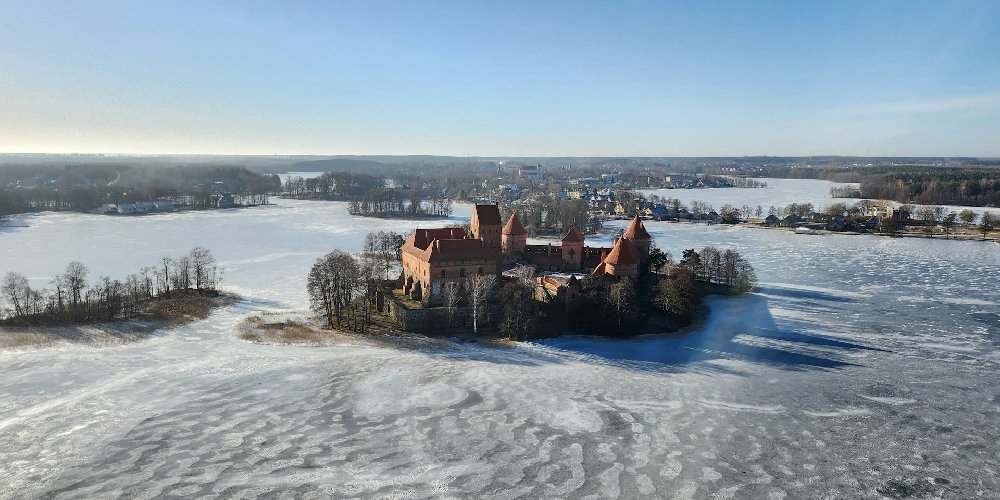
Lithuania, a small yet vibrant European country, is home to more than 50 higher education institutions, offering a wide range of academic programs for international students. The nation prides itself on having a fully literate population and consistently high school attendance, surpassing the European Union average.
Over the past two decades, Lithuania has witnessed rapid economic growth, emerging as one of the fastest-growing economies in the Baltic region. Despite modernization, the country retains its rich historical charm, providing students with a chance to explore one of the best-preserved medieval landscapes in Europe.
Lithuania is dotted with around 2,000 historical structures, showcasing early Eastern European architectural styles, from castles to old town squares. Combined with its pleasant climate and scenic mix of towns, forests, and rolling hills, Lithuania offers a unique and inspiring environment for both study and exploration.
Why Should You Study in Lithuania?
Lithuania offers a high-quality European education system that follows the Bologna Process, ensuring international recognition of qualifications. All higher education institutions in the country use the European Credit Transfer and Accumulation System (ECTS), allowing students to easily transfer credits across European universities.
Lithuanian universities provide three academic degree levels — bachelor’s, master’s, and doctoral — along with integrated study programs that combine bachelor’s and master’s degrees into one comprehensive course.
Higher education in Lithuania is divided into two main types of institutions:
- Colleges (Kolegija): Focused on practical and vocational training, preparing students for professional careers through hands-on learning.
- Universities: More research-oriented, offering academically focused programs and advanced study opportunities.
Students can choose between public and private institutions, both known for maintaining rigorous academic standards and innovative teaching approaches. Lithuania also holds the distinction of having one of the oldest education traditions in Eastern Europe, blending historical excellence with modern advancements.
In the QS World University Rankings 2022, four Lithuanian universities earned recognition:
- Vilnius University – Ranked 400th, and regarded as the country’s most prestigious institution.
- Vilnius Gediminas Technical University – Positioned between 751st and 800th.
- Kaunas University of Technology and Vytautas Magnus University – Both also featured in the global rankings, highlighting Lithuania’s growing presence in international education.
More Information on Lithuania
Lithuania, officially known as the Republic of Lithuania, is a vibrant Baltic nation with a population of around 2.8 million people. Since regaining its independence, the country has made remarkable progress, transitioning from a former communist state to a modern, forward-looking democracy. Lithuania’s transformation accelerated after the dissolution of the Soviet Union, leading to rapid political and economic modernization.
Over the years, Lithuania has strengthened its position on the global stage by joining key international organizations — becoming a member of the United Nations in 1991, the World Trade Organization in 2001, and the European Union in 2004. Its strong economic growth has earned it the nickname “The Baltic Tiger,” symbolizing its success in adapting to global market dynamics and innovation.The nation is celebrated for its architecturally rich cities and towns, where Gothic, Renaissance, Baroque, and modern styles coexist beautifully. Lithuania offers a distinctive mix of historical charm and contemporary development, making it an attractive destination for students and travelers alike.
The country experiences a temperate continental climate, with cold, snowy winters and pleasantly warm summers. The landscape is mostly flat, covered with lush meadows, forests, and farmlands, giving it a peaceful, green character. Hill forts, found across the country, serve as reminders of Lithuania’s ancient pagan traditions and its historical role in defending the Baltic region.
Lithuanian Study and Living Costs
Lithuania uses the Euro (€) as its official currency, aligning with many other European Union nations. Tuition fees in Lithuanian universities vary based on the institution, program level, and nationality of the student. Generally, EU and EEA students benefit from lower tuition rates compared to non-EU applicants.
On average, undergraduate programs cost between €1,000 and €5,000 per academic year, depending on the chosen field of study. Postgraduate (master’s) degrees typically range from €2,500 to €6,500 annually, while doctoral studies can cost up to €10,000 per year. Many universities and government programs offer scholarships and financial aid to both local and international students. Prospective applicants should contact their respective universities for detailed information on available funding opportunities and eligibility criteria.
Living expenses in Lithuania are considered affordable compared to Western Europe. Students generally spend between €450 and €900 per month, covering housing, food, transportation, study materials, and leisure activities. Major cities like Vilnius and Kaunas may have slightly higher costs, but overall, Lithuania remains one of the most budget-friendly destinations in the EU.
Health insurance is an essential requirement. Students from EU countries with a European Health Insurance Card (EHIC) can access public healthcare services free of charge, although this does not include private treatment. Non-EU students are required to obtain private health insurance for the duration of their studies.
Student Visas for Lithuania
Visa and residence requirements depend on your citizenship. EU and EEA nationals do not need a visa to enter Lithuania but must register with the Migration Department and declare their place of residence within seven days of arrival.
For non-EU/EEA students, a temporary residence permit (TRP) is required to study and stay in the country. This permit is typically valid for one year and can be renewed annually for the duration of the study program. The application process usually involves submitting documents such as proof of university enrollment, financial stability, and health insurance coverage.
Applicants from countries outside the EU should apply for a national visa (Type D) or residence permit through the nearest Lithuanian embassy or consulate before traveling. For detailed eligibility and document requirements, students are advised to visit the official website of the Lithuanian Migration Department or the Ministry of Foreign Affairs.

Languages
Lithuania’s official language is Lithuanian, but its universities offer degrees in both Lithuanian and English. English is more commonly used for postgraduate programs. If you choose to study in a language other than your native one, you will likely need to demonstrate proficiency. Institutions often provide language classes to help students meet requirements. Even if your program is in English, learning Lithuanian is encouraged. Interacting with locals and fellow students is an effective way to practice. Proficiency in Lithuanian is a valuable asset for your CV or resume!
Cities
Vilnius
Vilnius, the capital and largest city of Lithuania, is home to roughly 550,000 residents and serves as the country’s political, cultural, and academic heart. Recognized as a Gamma-level global city, Vilnius blends historical elegance with a growing modern identity. Before World War II, it was often called the “Jerusalem of the North” for its once-flourishing Jewish community and intellectual influence.
The city’s Old Town, one of the most beautifully preserved in Europe, has earned UNESCO World Heritage status for its rich architectural diversity, ranging from Gothic and Renaissance to Baroque and Classical styles. Vilnius offers a charming mix of cobblestone streets, contemporary cafes, and artistic spaces, making it a hub for creativity and learning.
Vilnius is home to Vilnius University, the oldest higher education institution in the Baltic States, established in 1579. Known for its academic excellence, it provides a wide selection of degree programs across the sciences, arts, and humanities. The university’s historical campus and libraries serve as landmarks of Lithuanian education and culture, attracting students from all over the world.
Kaunas
Located in central Lithuania, Kaunas is the country’s second-largest city and a major center for education, innovation, and the arts. With a population of about 330,000, Kaunas has long been regarded as Lithuania’s academic and historical capital. The city is famous for its interwar architecture, particularly its stunning Art Deco buildings, and was named one of the European Capitals of Culture in 2022.
Kaunas has a strong student presence and is often called the “City of Students.” It hosts several prestigious universities, including the Kaunas University of Technology (KTU), Lithuanian University of Health Sciences (LSMU), and Lithuanian Sports University. These institutions welcome thousands of international students each year, fostering a diverse and dynamic academic environment.
Beyond academics, Kaunas offers an appealing quality of life with scenic rivers, affordable living costs, and a lively cultural calendar filled with festivals, museums, and exhibitions. The city’s youthful energy and historical charm make it an ideal destination for international students pursuing higher education in Lithuania.