
Study Destinations
Study in Malta
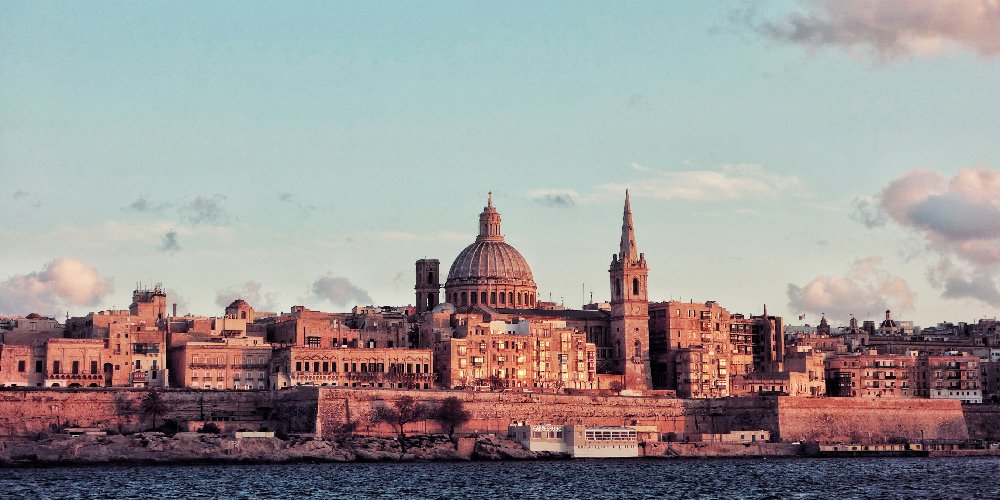
Malta, a Mediterranean island nation with a history dating back to around 5900 BC, was once a crucial naval base because of its strategic location. Most institutions and colleges are located near Valletta. International students can find a wide array of courses of interest at these institutions!
Why Learn in Malta?
Malta offers an appealing environment for international students, with over 300 days of sunshine annually, making it one of the sunniest countries in the world. Its compact size allows for convenient travel across its three main islands—Malta, Gozo, and Comino—providing a unique and accessible setting for higher education. Since joining the European Union in 2004, Malta has strengthened academic and institutional ties with other EU member states, aligning its education system closely with European standards.
Malta’s higher education sector comprises both public and private institutions, offering programs across various disciplines, including specialized fields such as tourism, hospitality, engineering, and the arts. The University of Malta is the country’s leading academic institution, while the Malta College of Arts, Science, and Technology (MCAST) offers vocational and applied programs. The academic calendar in Malta follows a structure similar to that of other European nations, with qualifications aligned to the European Qualifications Framework (EQF), ensuring compatibility across borders.
About Malta
Malta, officially known as the Republic of Malta, is a Southern European archipelago located in the central Mediterranean. The nation comprises three inhabited islands—Malta, Gozo, and Comino—and has a total population of approximately 475,000, making it one of the smallest and most densely populated countries globally.Historically, Malta was first settled by peoples from Sicily, and its strategic location has made it a focal point for various empires. After brief French occupation in 1798, the islands were placed under British rule in 1814 following a Declaration of Rights. Malta achieved independence in 1964, became a republic in 1974, and was formally declared a neutral and non-aligned state in 1979. The country is rich in cultural heritage, featuring nine UNESCO World Heritage Sites, including the Megalithic Temples and the historic city of Valletta.
Cost of Living and Attending School in Malta
Malta’s official currency is the euro (€).Tuition fees vary depending on the student’s nationality, chosen program, and institution. Students from EU/EEA countries are often exempt from paying tuition for full-time undergraduate degrees. For postgraduate programs, EU/EEA citizens typically pay the same tuition rates as Maltese students. In contrast, non-EU/EEA students are generally required to pay tuition fees, which range on average between €1,000 and €6,000 per year, depending on the field and institution.The cost of living in Malta is considered moderate compared to other European study destinations. Students should budget between €500 and €1,000 per month for housing, food, transport, and personal expenses. Costs may be higher in central urban areas such as Valletta or Sliema.
Student Visas for Malta
Visa requirements for studying in Malta are determined by the student’s nationality.
- EU/EEA nationals intending to stay for more than three months must apply for a residence permit after arriving in Malta and registering at their educational institution.
- Non-EU/EEA nationals must apply for both a student visa and an e-residence document, regardless of the intended length of stay.
Students are advised to begin the visa application process well in advance of their program start date. Application assistance and requirements can be obtained from the Maltese embassy or consulate in their home country.

Languages
Malta recognizes three official languages: English, Maltese, and Maltese Sign Language. Italian, spoken and understood by 66% of the population, is also widely used. While institutions like the University of Malta conduct courses exclusively in English, courses across Malta are available in either Maltese or English. If you opt to study in a non-native language, you may need to demonstrate proficiency. Universities typically offer language courses to help students meet requirements. Learning Maltese or Italian, even if studying in English, is encouraged. Practicing with locals and fellow students enhances language skills and enriches your experience, enhancing your CV or resume and quality of life.
Cities
Valletta
Valletta, the capital city of Malta, has a population of approximately 6,500 residents, making it one of Europe’s smallest capital cities by population. Founded in 1566 by the Knights of St. John, Valletta is the southernmost capital in Europe. Despite its small geographic footprint, the city is a significant cultural and administrative hub.Valletta’s architectural landscape is a fusion of Baroque design, alongside elements from the Neo-Classical, Mannerist, and Modernist periods. Much of the city was heavily damaged during World War II, prompting major reconstruction efforts in the post-war era. In recognition of its historical and cultural significance, Valletta was declared a UNESCO World Heritage Site in 1980. Further reinforcing its cultural prominence, Valletta was designated one of the European Capitals of Culture in 2018.The city is also home to a campus of the University of Malta, one of the country’s premier higher education institutions. Founded in 1769, the University currently serves over 11,500 students, including more than 750 international students from 82 countries.