
That’s usually when the panic sets in. You’ve got a $2,500 car repair or a medical bill that just won’t quit, and when you check your credit score on your phone, the number is lower than you thought. You start wondering if you’ll even qualify for a loan.
The short answer is yes. You can get a personal loan regardless of your credit score. If you’re in the 600s or even the 500s, there are lenders out there ready to take your application. The catch is the price. You’ll likely face much higher interest rates and stricter terms that make your monthly budget feel incredibly tight.
It’s not a question of “if” you can get the money, but “how much” it’ll cost you in the long run. High-interest debt is a slippery slope, so try to understand how the lending market actually works before you sign anything.
The Great Credit Divide: What Lenders Actually Look For
Lenders don’t just look at a single number; they look at a story. A credit score is just a shorthand summary of how you’ve handled money in the past. When you apply, a bank looks at that score alongside your income, your debt-to-income ratio, and your job history to decide if you’re a “risk.”
If your score is in the 700s, you’re essentially a VIP. You get the lowest rates and the most flexibility. But the market isn’t one single block. Average credit scores for people getting approved for personal loans have shifted over time; for instance, the average score for approved applicants dropped from 717 in 2019 Q3 to 708 in 2020 Q3.
If you’re in the lower bracket, you’ll end up looking at alternative lenders. These are often non-bank institutions or fintech companies that focus on high-risk profiles. They want your business, but they charge a premium for the risk they take.
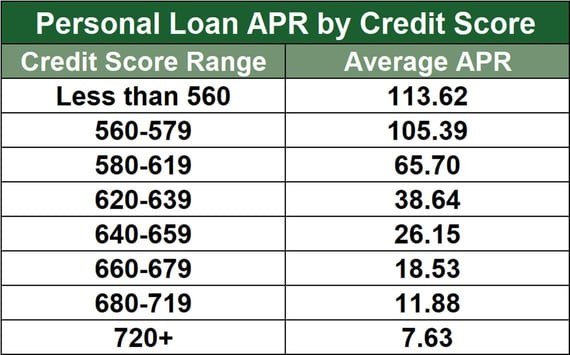
This is where you need to be careful. There is a massive gap between a 680 and a 580 for interest. If you borrow $10,000, that difference could mean paying back an extra $3,000 or more just in interest.
Here is how these tiers generally behave in the current market:
| Credit Category | Typical Score Range | Lender Availability | Interest Rate Trend |
|---|---|---|---|
| Excellent | 720 – 850 | High (Banks/Credit Unions) | Very Low |
| Good | 660 – 719 | High (Major Lenders) | Moderate |
| Fair | 580 – 659 | Moderate (Fintech/Online) | High |
| Poor/Bad | Below 580 | Low (Specialized Lenders) | Very High |
Navigating the “Bad Credit” Lenders and Their Promises
If your score is below 580, you’ll see ads that sound too good to be true. They’ll use phrases like “guaranteed approval” or “no credit check.” Take those with a grain of salt.
There are specific platforms for this. For example, Radcred recently launched a new platform aimed at those with credit scores of 580 or lower, offering loans for people who might be rejected by traditional big-name banks. It’s a legitimate part of the market, but it is a specialized one.
When you use these lenders, you’re essentially paying for the convenience of being seen. Traditional banks have rigid rules. If you don’t hit their threshold, the computer says no. Alternative lenders use “soft” data, like your bank activity or income, to decide if they’ll work with you.
Don’t let the “guaranteed” marketing fool you, though. While a lender might be likely to approve you, they’ll also likely charge an APR that feels more like a penalty. It’s a trade-off: you get the cash to fix your car today, but you’ll be paying for it for a much longer time.
I knew a guy named Mark who needed $3,000 to fix his transmission so he could keep his job. He couldn’t get a bank loan because of an old medical collection. He went with a “bad credit” specialist and got the money in 24 hours, but the interest rate was so high his monthly payment was nearly $250 for a small loan. He paid it off, but it took him almost two years.
The Hidden Costs of High-Interest Borrowing
When you don’t get the best rates, you aren’t just paying more interest; you might face fees that eat into your actual loan. You might see “origination fees” taken out before you even see a cent.
If you borrow $5,000 but the lender takes a 5% origination fee, you only get $4,750 in your bank account. But you’re still paying interest on the full $5,000. Lenders make money this way upfront, so check the fine print.
Watch out for the “predatory” side, too. There is a huge difference between a high-interest personal loan and a payday loan. Payday loans are often a trap, designed to be rolled over month after month until you’re stuck in a debt cycle.
When looking at options, keep these things in mind:
- APR vs. Interest Rate: Always look at the Annual Percentage Rate. It includes the interest plus the fees. It’s the only number that tells you the true cost.
- Fixed vs. Variable Rates: A fixed rate stays the same. A variable rate can jump up, making payments unpredictable. If you have a bad credit loan, stay away from variable rates.
- Prepayment Penalties: Some lenders charge you a fee if you try to pay the loan off early. If you get a raise and want to clear your debt, you shouldn’t be punished for it.
If you’re looking into FastLendGo personal loans or similar products, be very clear about how quickly you can move that money and how much it will cost to get out of the debt once you’re back on your feet.
How to Prepare for the Application Process
Don’t just walk into an application blindly. Even if your credit is a mess, being organized can help you get a better deal or prevent a surprise.
First, pull your own credit report. You can get a free copy from the major bureaus. You need to know exactly what’s on there. If there’s a mistake, like a late payment that you actually paid on time, dispute it immediately. A single error could be the difference between a 570 and a 610, and that jump could save you thousands.
Second, gather proof of income. Lenders want to see steady cash flow. This means recent pay stubs, W-2s, or bank statements if you’re self-employed. The more “official” your documentation looks, the more confident a lender feels about you paying them back.
Finally, do the math before you hit “submit.” Use an online loan calculator to see the monthly payment. If that number makes your stomach sink, don’t take the loan. It is better to struggle with a broken car for a month than to struggle with high-interest debt for three years.
If you want to play this right, use the loan for something that actually helps your situation. Using a personal loan to consolidate high-interest credit card debt can be smart because it lowers your overall rate and simplifies your life. Using a loan to buy something that loses value immediately, like a new TV, is just digging a deeper hole.
Don’t let a bad number define your financial future, but don’t let a fast loan ruin it either.
Quick answers
Can I get a personal loan with a credit score of 500?
Yes, but you will likely need a co-signer or may need to look at specialized subprime lenders with higher interest rates.
Who will give me a loan when nobody else will?
Lenders that specialize in bad credit, such as credit unions or online subprime lenders, are your best option when traditional banks decline you.
Can I get a $200,000 loan with a 700 credit score?
While possible, most personal loan lenders cap amounts at $50,000 to $100,000; you may need a mortgage or a secured loan for that amount.
What credit score do I need for a $10,000 personal loan?
A score of 670 or higher is typically required to secure a $10,000 loan with competitive interest rates from most mainstream lenders.
How does my credit score affect my personal loan interest rate?
Higher credit scores qualify you for lower interest rates, while lower scores result in higher rates or loan denials.